
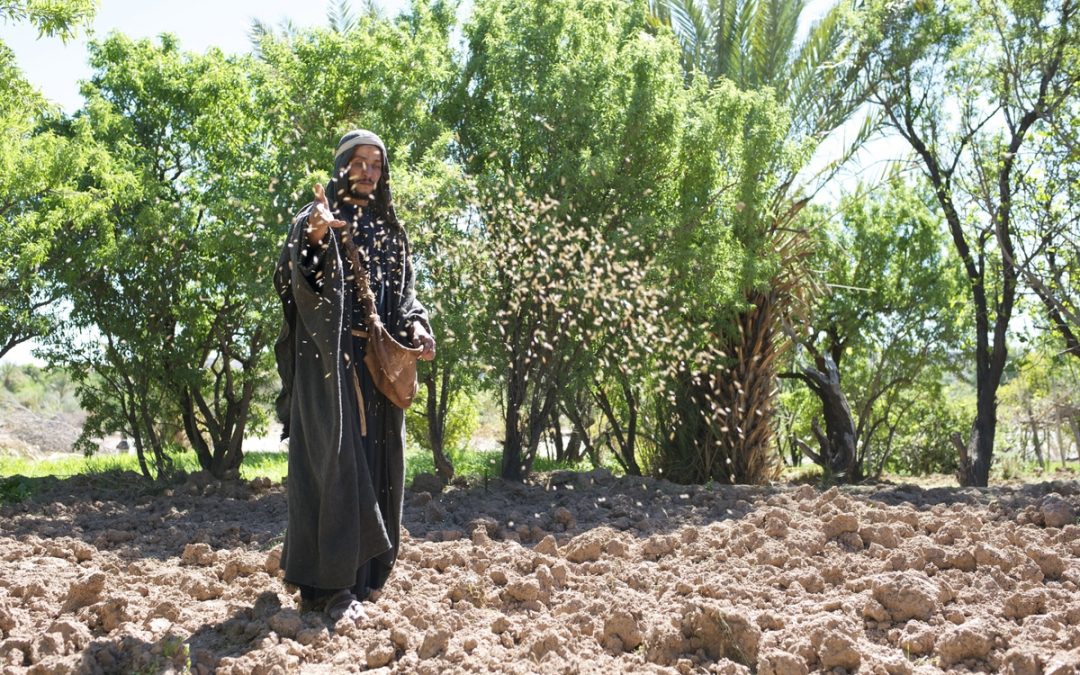
In The Parable of the Sower, Jesus shares a profound truth about the condition of our hearts and the radical nature of God's grace.
That same day Jesus went out of the house and sat beside the sea. 2 And great crowds gathered about him, so that he got into a boat and sat down. And the whole crowd stood on the beach. 3 And he told them many things in parables, saying: “A sower went out to sow. 4 And as he sowed, some seeds fell along the path, and the birds came and devoured them. 5 Other seeds fell on rocky ground, where they did not have much soil, and immediately they sprang up, since they had no depth of soil, 6 but when the sun rose they were scorched. And since they had no root, they withered away. 7 Other seeds fell among thorns, and the thorns grew up and choked them. 8 Other seeds fell on good soil and produced grain, some a hundredfold, some sixty, some thirty. 9 He who has ears, let him hear.” Matthew 13:1-9
Jesus isn’t preaching to agricultural experts in an air-conditioned boardroom. He is speaking to ordinary people by the Sea of Galilee—people who knew dirt under their fingernails, sweat on their backs, and the anxious prayer of every farmer who has ever looked up at the sky and wondered whether the rain would come. And perhaps, as Jesus speaks, there is a real farmer somewhere on the nearby hillside. A man with a heavy sack slung over his shoulder, walking the field, reaching in, and casting seed with a wide sweeping motion.
Now, that is important. In the ancient world, farming was not as precise as the modern equipment we see today. The farmer did not climb into a climate-controlled tractor guided by GPS. He walked. He carried. He threw. Seed flew in every direction. Some seed landed where it should. Some seed landed where any sensible person might say it was wasted.
And that is the first surprise in the parable. The Sower is wildly generous. A human businessperson would analyze the soil first. A human strategist would say, “Do not waste good seed on bad ground.” But the Sower in Jesus’ story does not hold back. He casts the Word everywhere—on the hard path, on the rocky ledge, among the thorns, and into the good soil. He does not pre-screen the field. He does not ask who is worthy. He simply pours out the seed.
That is how God works. He is not stingy with grace. He is not careful in the way we are careful. He sends His Word to saints and sinners, skeptics and seekers, faithful churchgoers and people who have not darkened the door of a sanctuary in years. The seed is the Word of God, and the Word carries life in itself. The power is not in the soil. The power is in the seed.
1. The Path: The Hardened Heart
But as this beautiful, living seed hits the ground, The Parable of the Sower forces us to confront four distinct conditions of the human heart. The first tragedy happens right at our feet, on the beaten path. Jesus says, “As he sowed, some seeds fell along the path, and the birds came and devoured them.” Later He explains, “When anyone hears the word of the kingdom and does not understand it, the evil one comes and snatches away what has been sown in his heart.”
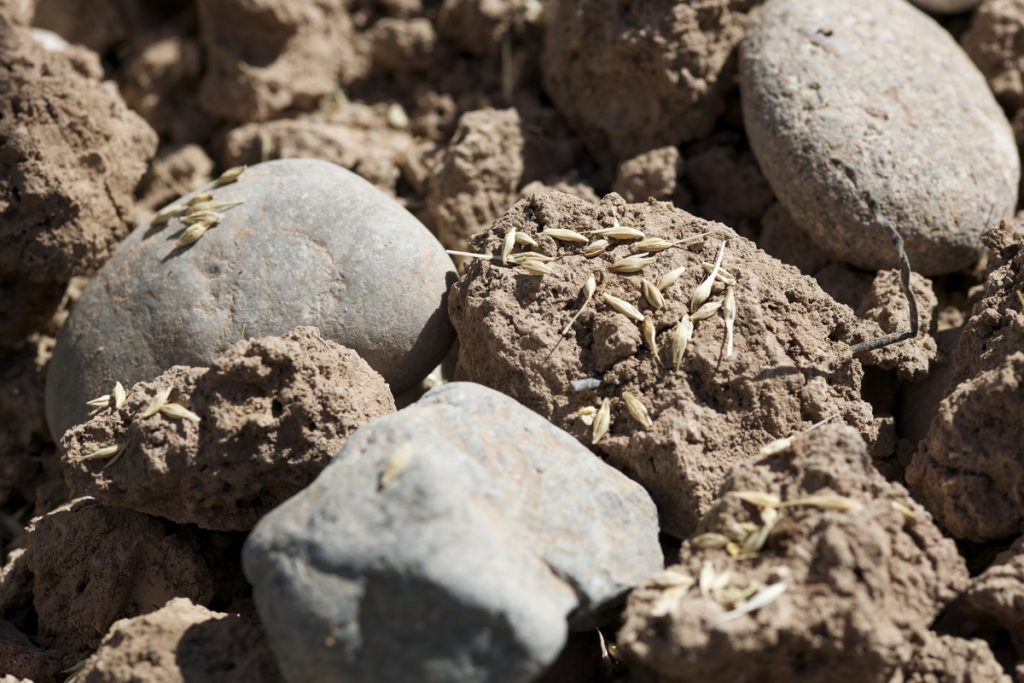
Think of a dirt footpath cut through a park or across a field. At first, it was just soil like everything else. But then one person walked on it. Then another. Then hundreds. Then thousands. Boots, bicycles, wagons, and years of pressure packed that soil down until it became almost like concrete. Drop a seed on that path, and it cannot sink in even a millimeter. It sits exposed on the surface, easy pickings for the birds.
That is a picture of the hardened heart. And before we point across the aisle or across the street, we should admit that this path runs through all of us. A heart can be packed down by cynicism. Packed down by disappointment. Packed down by pride. Packed down by pain. Packed down by the constant traffic of the world telling us, “You do not need God. You are fine. You are in control. You know better.”
And the devil is patient. He does not always roar. Sometimes he simply waits for the Word to land on the surface of a distracted heart, and then he sweeps in quietly. Before the Word can convict, comfort, challenge, or heal, it is gone. The sermon is forgotten by lunch. The Scripture reading is drowned out by the next notification. The promise of Christ is pushed aside by the old familiar voice that says, “That may be true for someone else, but not for you.”
That is the Law. It exposes the hardness we cannot soften by our own strength. But hear this: the Sower still sows on the path. Christ still speaks to hardened hearts. He still sends His Word where we would have given up long ago. And if your heart feels packed down today, do not despair. The One who made the soil can break it open again.
2. Rocky Ground: The Shallow Heart
But not every heart is cold and concrete. Some hearts appear eager. Some receive the Word with joy. Jesus says, “Other seeds fell on rocky ground, where they did not have much soil, and immediately they sprang up.” That sounds promising at first. Fast growth. Visible excitement. A spiritual green shoot breaking through the surface.
Picture a ledge of limestone covered by just a thin layer of topsoil. The seed lands there, and for a little while everything looks wonderful. The rock traps the heat. The moisture stays near the surface. The plant shoots up quickly, maybe more quickly than the others. From the outside, it looks like success.
But underneath, there is no depth. The roots go down and strike stone. Then the sun rises. The same sun that should strengthen the plant now scorches it. The same heat that helps deeply rooted wheat mature becomes unbearable for the rootless plant. And because it has no root, it withers.
This is the shallow heart. In The Parable of the Sower, Jesus warns us about the heart that loves the idea of grace but shrinks back from the cross. It loves the music, the inspiration, the mountaintop moment, the feeling of being close to God. But then trouble comes. Illness comes. Conflict comes. Grief comes. Persecution comes. The theology of glory promised a painless Christianity, but Jesus never promised that. Jesus said, “Take up your cross and follow Me.”
Here is a word of comfort: trials are not proof that God has abandoned you. The sun that withers the rootless plant is the same sun that strengthens the deeply rooted one. God can use suffering to drive our roots deeper into Christ, deeper into His promises, deeper into the Means of Grace. The issue is not whether the sun will rise. It will. The question is where your roots are.
And your roots are not held by your emotional intensity. They are held by Christ. He is the vine. He is the root. He is the One who entered the heat of judgment for you, who endured the scorching wrath of sin on the cross, and who rose again so that your life would be hidden in Him.
3. Thorny Ground: The Crowded Heart
Yet there are times when the soil is deep and the plant grows successfully into adulthood, only to face a slower, quieter, and far more suffocating enemy. Jesus says, “Other seeds fell among thorns, and the thorns grew up and choked them.” He explains that these are the ones who hear the Word, but “the cares of the world and the deceitfulness of riches choke the word, and it proves unfruitful.”
Think of an untamed garden. The soil is dark and fertile. The seed has room to germinate. But hidden in that same soil are aggressive weed seeds. The wheat and the thorns grow together. And thorns are thieves. They grow faster. They branch wider. They steal sunlight. They drink the nutrients. The wheat may not die immediately, but it becomes pale, spindly, and fruitless.
Notice that in The Parable of the Sower, Jesus doesn't limit the thorns to scandalous, obvious sins. Instead, He names ordinary things: worry and wealth. The cares of this life. The deceitfulness of riches. That is what makes this so dangerous. These thorns often look respectable. Paying bills. Planning schedules. Building a future. Keeping up. Staying informed. Managing responsibilities. None of those things is evil in itself. But they become thorns when they crowd out the Word of God.
We know this crowded heart. It is the heart that says, “I believe, Lord, but I am busy.” “I trust You, Lord, but I am anxious.” “I know Your promises, Lord, but I need to secure my life first.” The Word is not rejected outright. It is simply given a smaller and smaller corner until the thorns have taken over the field.
And here again the Law speaks honestly. We cannot weed our hearts clean by sheer determination. Anxiety grows back. Greed grows back. Distraction grows back. The old Adam is an excellent gardener when it comes to thorns. But Christ comes into the thorn patch. He does not stand at the edge of your tangled life and scold you from a distance. He enters it. He wears the crown of thorns. He takes into His own flesh the curse that our sin has grown, and by His wounds He brings forgiveness, freedom, and peace.
4. Good Soil: The Receptive Heart
Left to ourselves, our hearts are naturally hard paths, shallow rocks, and tangled weed-beds. We cannot plow our own souls into good soil. So how does any good soil come to be? The Divine Farmer must step back into the field.

The Parable of the Sower - Good Soil and Abundant Harvest
Imagine a beautiful, dark, rich field. But remember how it became that way. It did not decide to be good soil. A farmer came with a plow. The blade cut deep. The hard crust was broken open. Stones were pulled out. Thorns were ripped up by the roots. The field was wounded so that it could become fruitful.
That is what the Law does. It plows. It breaks. It exposes. It shows us the hardness, the shallowness, and the thorns we would rather ignore. The Law does not flatter us. It tears open the ground. But the Gospel waters what the Law has broken. The Gospel speaks Christ into the open wound and says, “Your sins are forgiven. Your Savior has died. Your Savior has risen. You belong to Him.”
In Lutheran theology, we must be careful here. The good soil is not the spiritually impressive person who made himself receptive by superior effort. Faith is not self-improvement. Faith is gift. The Holy Spirit works through the Word to create what He commands. He opens ears. He softens hearts. He gives understanding. He keeps the seed alive.
And then comes the miracle: fruit. Thirtyfold. Sixtyfold. A hundredfold. No farmer in that day would hear those numbers and shrug. That is an astonishing harvest. That is grace multiplying beyond calculation. And notice this beautiful thing: a wheat plant does not eat its own grain. The fruit borne by the Christian is for the neighbor. God produces faith in you, and then He turns you outward in love—toward your family, your congregation, your workplace, your community, the hurting, the overlooked, the difficult person, the one who needs mercy.
The harvest belongs to God. The fruit is His work. The seed is His Word. The field is His field. And still, in His mercy, He lets us participate in the joy of the harvest.
Conclusion: The Promise of the Seed
So where should this parable leave us? Not staring anxiously into ourselves, asking, “What kind of soil am I today?” There is a place for self-examination, yes. The Law must do its work. But if the sermon ends with you staring at your own dirt, then we have missed the heart of the parable.
Look instead to the Sower. Look to His generosity. Look to the Seed. The Word of God is living and active. It does what God sends it to do. If your heart feels like a path, Christ can break it up. If your faith feels shallow, Christ can root you more deeply in Himself. If your life feels choked by thorns, Christ has worn the crown of thorns for you. He forgives. He clears. He restores. He keeps sowing.
And here is the promise: the success of the harvest does not rest on the strength of your soil but on the power of God’s Word and the faithfulness of the Sower. Christ has gone into the ground Himself. Like a seed buried in the earth, He was laid in the tomb. And on the third day, He rose, the first fruits of the new creation. Because He lives, His Word will not return empty.
So receive the Word. Hear it again. Let it plow. Let it comfort. Let it take root. Let the Sower do His work. Amen.
Resources:
As highlighted in Martin Luther’s sermons on the Kingdom parables, The Parable of the Sower and the Kingdom parables, the focus must remain entirely on the absolute sufficiency of Christ's Word.”
You can visit the blog section to find resources and insights on Mission Post.