Becoming Bridge Builders
A place for anyone who believes connection is stronger than division. Here, you’ll find practical tools, meaningful insights, and real-life inspiration to help you navigate differences with empathy, build trust in your relationships, and foster understanding in your everyday life.
Whether you’re leading others or simply seeking to grow, this is your starting point for becoming someone who brings people together—one conversation at a time.


Subscribe
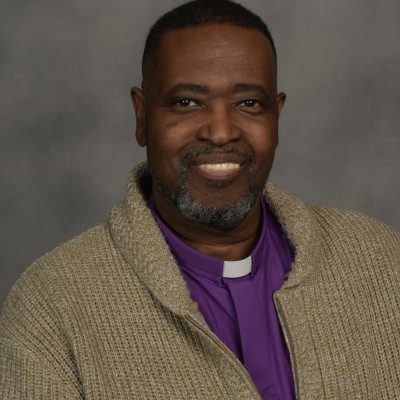
Hi there, I’m B.Keith Haney


About
About
I’m passionate about helping people build meaningful connections, navigate differences with empathy, and bring unity into everyday conversations.

Home
Subscribe
Faith


Community
Subscribe
A Safe Place for Courageous
Conversation
I believe that meaningful change begins where honest conversation is possible. In a world shaped by polarization, silence, and fear of saying the wrong thing, we create space for something different: a safe place to speak truthfully, listen deeply, and remain connected—even when the conversations are difficult.
Being a safe place does not mean avoiding tension or disagreement. It means cultivating an environment of trust where people can bring their authentic selves—their questions, convictions, doubts, stories, and wounds—without fear of being dismissed or shamed. Here, complexity is welcomed. Curiosity is encouraged. And every voice matters.
I recognize that hard conversations often carry emotional weight. Topics like race, justice, faith, power, history, and lived experience can surface pain as well as hope. That’s why we lead with radical grace, Christ-centered humility and care, setting disagreements that honor dignity, encourage mutual respect, and protect the glimpse of the Creator of everyone in the room.

The Power of Delegation
1. Why Busyness Without Delegation in Leadership Fails
Moses wasn’t lazy—he was overwhelmed. People lined up for his attention all day. He was committed and doing God’s work. Yet Jethro’s assessment is blunt:
“This is no way to go about it. You’ll burn out, and the people right along with you.” (v.17)
Leadership insight:
Key takeaway: A sustainable structure is necessary for meaningful, lasting impact.
Many leaders fall into this trap, often leading to the chronic exhaustion identified in Harvard Business Review’s guide to overcoming burnout:
- Saying yes to every request
- Becoming the bottleneck for decisions
- Believing they are indispensable
But when everything depends on one person, the system is fragile.
2. Doing It All Yourself Damages Others Too

A man standing at the top of a mountain, taking in the majesty of God.
Moses’ approach didn’t just hurt him—it hurt everyone: People waited all day for help.
- Decisions were delayed
- Frustration likely grew
Jethro points out that both the leader and the people suffer.
Leadership insight:
Key takeaway: Effective delegation enables growth—for both leaders and their teams.
When leaders hold responsibilities too tightly, others do not develop.
- Responsibility isn’t shared.
- Capacity remains small
3. Wise Leaders Accept Outside Counsel
One of the most powerful moments in this passage is simple:
“Moses listened to the counsel of his father-in-law and did everything he said.” (v.24)
Moses didn’t defend himself. He didn’t justify his workload. He listened.
Key takeaway: The best leaders remain open to learning and outside insight.
Sometimes the clearest perspective comes from someone outside the system. Pride resists that; wisdom embraces it.
4. Leadership Requires Prioritization

Jethro reframes Moses’ role:
“Your job is to teach them… to show them how to live…” (v.20)
Moses couldn’t do everything, so he needed to focus on what only he could do.
Key takeaway: Prioritize what only you can do. Delegate the rest—to maximize value.
- What they are uniquely called to do.
Not every task requires your direct involvement.
5. How Delegation in Leadership Is a Spiritual Discipline
Jethro instructs Moses to appoint qualified leaders:
- Capable
- God-fearing
- Trustworthy
Then gives them responsibility at different levels—thousands, hundreds, fifties, tens.
This wasn’t random delegation—it was intentional structure. To apply this practically today, leaders often use frameworks like the Eisenhower Matrix on MindTools to categorize tasks before passing them on.
Leadership insight:
Key takeaway: Delegation builds systems that reflect integrity and accountability.
- Integrity
- Competence
- Accountability
Healthy leadership multiplies leadership.
6. How Delegation in Leadership Promotes Group Flourishing
The result of Jethro’s plan was powerful:
“They will share your load… you’ll have the strength… and the people… will flourish.” (v.22–23)
Notice the outcome:
- Moses gained endurance.
- The people benefited.
- The system became sustainable.
Key takeaway: Leadership aims for group flourishing, not personal control.
A healthy leader builds a structure where:
- Responsibility is shared.
- Leaders are developed.
- People are served more effectively.
Final Takeaway
Exodus 18 challenges a leadership myth: “If I don’t do it, it won’t get done right.”
Moses learned that the opposite is often true. When leaders try to do everything:
- They burn out.
- Others stagnate.
- The mission suffers.
But when they:
- Listen to wise counsel.
- Focus on their core calling.
- Develop and trust others.
They create something far greater than personal effort can achieve.
Leadership isn’t about being needed everywhere—it’s about building something that thrives even when you’re not.
If you are passionate about breaking down barriers, growing in your leadership journey, and uniting the Body of Christ, you don’t have to do it alone. Join a community of like-minded leaders dedicated to this vital mission.
👉 Sign Up for My Newsletter Today to receive practical leadership insights, resources, and encouragement delivered straight to your inbox.
Is There Room at the Table for Everyone?
9 As Jesus passed on from there, he saw a man called Matthew sitting at the tax booth, and he said to him, “Follow me.” And he rose and followed him.
10 And as Jesus reclined at table in the house, behold, many tax collectors and sinners came and were reclining with Jesus and his disciples. 11 And when the Pharisees saw this, they said to his disciples, “Why does your teacher eat with tax collectors and sinners?” 12 But when he heard it, he said, “Those who are well have no need of a physician, but those who are sick. 13 Go and learn what this means: ‘I desire mercy, and not sacrifice.’ For I came not to call the righteous, but sinners.”
There Is Still Room at the Table
Long before a famous tech startup redefined hospitality by offering an unexpected room at the table, Jesus was completely transforming how we welcome people into the kingdom of God. “It started in 2007 with an air mattress in a crap San Francisco apartment. The rent was due, hotels were booked up for a design conference, and two roommates had an idea. What if they charged guests to sleep on the floor? That weekend three strangers stayed in their living room and an industry was quietly born ….” 1
Those words were the beginning of a podcast with one of the founders of Airbnb. Their idea has helped redefine lodging while traveling. .That small beginning has since grown into a global network with over 8 million active listings and 5 million hosts, spanning more than 150,000 cities in 220 countries according to the official Airbnb Newsroom.”
Airbnb welcomes people from all walks of life into other people’s homes to stay for a defined period. It’s a great idea that has obviously blossomed. But not without problems. Sometimes the guests take advantage. Google “Airbnb horror stories” and you’ll find no shortage of incidents where things got way out of hand. Property damage, fights, police being called, arrests made, and all sorts of people with less-than-stellar behavior.
Our scripture today hints at the problem of people welcomed by Jesus but quickly judged by others. All that helps us to think about the dynamics of welcome in the kingdom of God!
The Unexpected Call: Grace that Transforms (v. 9)
9 As Jesus passed on from there, he saw a man called Matthew sitting at the tax booth, and he said to him, “Follow me.” And he rose and followed him.
The call of Matthew is told with striking brevity—just one sentence. His response is just as concise. Jesus calls, and Matthew follows. That’s it. No buildup, no debate, no delay. Jesus simply says, “Follow me,” and Matthew gets up and follows Him.
It almost feels too simple.
In a world where we analyze every decision, weigh every cost, and negotiate every commitment, Matthew’s response feels abrupt. But that’s the nature of grace—it doesn’t always come with a long explanation; sometimes it comes with a clear invitation. Come, follow me.
It’s like receiving a call that changes your life forever—a job offer you weren’t expecting, a diagnosis that shifts everything, or a voice that says, “This is your moment.” You don’t always get time to process it fully. You just know: If I don’t respond now, I may miss it.
That’s Matthew. Sitting at his tax booth, surrounded by money, records, and the machinery of corruption—and then Jesus walks by. Just two words: “Follow me.”
And Matthew leaves it all.
But beneath that simplicity lies something deeper. The story takes an unexpected turn. The one who gives the invitation becomes the guest in Matthew’s home. The calling leads to a table.
And that’s where things get uncomfortable.
Jesus and His disciples are reclining at Matthew’s table when the guest list starts to expand. Tax collectors. People with sketchy reputations. Those labeled “sinners.” These are Matthew’s old coworkers, his former circle, people who lived the same kind of life he had just walked away from.
Do you see what Matthew is doing? He doesn’t just follow Jesus privately—he introduces Jesus publicly.
It’s like someone who experiences real change—maybe freedom from addiction or a life transformed by faith—and the first instinct is, “I’ve got to bring my friends into this.” Not cleaned-up friends. Not church-ready friends. You know your actual real friends.
Matthew throws a banquet, and the table fills with people, your church friends might avoid.
And right in the middle of them—sits Jesus.
Not on the edge. Not observing from a distance. He is with them, eating, talking, present—as if they belong there.
And to the Pharisees, this is a problem.
Because in their thinking, holiness looks like separation. Avoidance. Distance. If you want to be right with God, you stay far away from people like that. From the culture that distracts us from the One True God.
But Jesus shows a different picture: holiness that moves toward brokenness, not away from it.
Think of a doctor. A doctor doesn’t stay away from the sick to remain healthy. The very nature of the calling is to move toward sickness in order to bring healing. Distance doesn’t cure the patient—presence does.
Jesus is at that table because that’s where healing needs to happen.
The Pharisees see it, but instead of speaking directly to Jesus, they go to His disciples.
“Why does your teacher eat with tax collectors and sinners?”
It’s indirect. It’s critical. It’s safer than confrontation.
Even today, this still happens. People don’t always go straight to the source—sometimes they talk around the issue instead of through it.
But Jesus doesn’t allow the conversation to stay indirect. He steps right into it and addresses them openly. He refuses to let misunderstanding define the moment.
And all of this unfolds because of one simple encounter:
The Target of Grace

Matthew was a tax collector—an outsider, seen as a traitor, someone who built wealth at the expense of others. If anyone seemed disqualified, it was him.
Application
And here’s the truth—we all know what it feels like to think, “I’m too far gone,” or “God wouldn’t choose someone like me.”
But the story of Matthew reminds us: grace doesn’t go looking for the qualified; it goes looking for the willing.
The Simplicity of the Command
Jesus offers just two words: “Follow me.” No checklist. No probation period. No demand to clean up first.
It’s not “fix your life and then come.”
It’s “come, and I will change your life along the way.”
Some of us are waiting until we “get it together” before we respond to God. But Jesus never said, “Fix yourself and follow me.” He simply said, “Follow me.”
The Immediate Response

Matthew gets up. He walks away. He leaves security, income, and identity behind.
He trades profit for purpose. Comfort for calling. Control for surrender.
Imagine leaving your career mid-day, not knowing where the next paycheck will come from, because something—or rather, Someone—is worth more.
That’s what Matthew does.
And the question for us becomes:
What are we still holding onto that keeps us from fully following?
Because you can’t hold onto your old life and take hold of Jesus at the same time.
Final Movement Toward Invitation
Matthew’s story doesn’t end with him leaving the table—it continues with him filling a table.
That’s the beauty of grace.
It doesn’t just change you—it sends you.
It turns followers into hosts.
It turns testimonies into invitations.
Because the same voice that said, “Follow me,”
is still calling today.
And there is still room at the table.
We talked earlier about the early days of Airbnb—the idea of opening your home to strangers and watching it grow into something massive. It’s an incredible success story. But every host will tell you the same thing: not every guest treats your home the way you hoped. Some ignore the rules. Some leave a mess behind. Some become stories you wish you didn’t have to tell.
Opening your door always comes with a measure of risk.
And in a different way, the same can be said when you say yes to God’s call.
When God enters your life and begins to move through it, things don’t always unfold the way you expect. The path is not always neat or predictable. Just look at the story of Scripture—Abraham leaves home without a map, Moses argues with God at a burning bush, David is anointed king but spends years running for his life, Paul is blinded before he can see clearly, Peter steps out in faith and then sinks in doubt.
Following God is not a straight, polished road—it’s a journey filled with surprises, interruptions, and moments that stretch you beyond your comfort.
It’s less like walking a well-lit sidewalk and more like stepping into a fog where you can only see a few feet ahead—but you keep walking because you trust the One leading you.
One of the biggest misconceptions we carry is this: when God calls someone, it must mean stepping into formal ministry—preaching, pastoring, or working in a church.
Sometimes that’s true.
But more often than we realize, God calls people right where they already are.
The problem is we’ve created a false divide—sacred over here, secular over there. Church work counts. Everything else… not so much.
But that’s not how God sees it.
In the 1970s, a man named William Diehl reflected on his 30-year career as a sales manager in the steel industry. He was successful, respected, and deeply committed to his faith. But he shared something striking: in all those years, not once did his church ask how God was at work through him in his job.
No one asked how he ministered to coworkers.
No one asked what challenges he faced living out his faith in that environment.
No one asked how the church could equip him to be a light in his workplace.
It was as if the only place ministry happened was inside the church walls.
Imagine being sent onto a mission field every day—a workplace filled with relationships, pressures, decisions—and yet no one ever acknowledges it as a place where God is active.
That’s how many people live.
But then there’s another story.
Betty was a young parent in 1970, simply trying to help make ends meet. She took a job at a newspaper, planning to stay for just one year.
One year turned into thirty-six.
Day after day, she walked into that newsroom—not as someone clocking in, but as someone sent. She built relationships with interns, reporters, and editors. She looked for small ways to serve, encourage, and reflect her faith—not always in dramatic moments, but in consistent ones.
A kind word here. A steady presence there. Integrity when no one was watching.
Over time, her life became a quiet testimony.
And when asked if she believed God had placed her there, she didn’t hesitate—“Yes.”
She didn’t leave her faith at the door when she walked into work. She carried it with her like a light—and over decades, that light touched countless lives.
And that raises a powerful question for us:
What if your workplace isn’t just a job—but an assignment?
What if your neighborhood, your routines, your relationships—aren’t random, but intentional placements by God?
What if the call of God on your life isn’t about going somewhere else—but about seeing where you already are differently?
Because here’s the truth:
God doesn’t just call pastors to pulpits.
He calls people to offices… classrooms… job sites… hospitals… homes… and conversations.
He calls people to tables—just like Matthew’s.
Because the same God who said, “Follow me,”
is still calling people—not just to leave where they are,
but to live differently where they already are.
Final Things for You to Ponder:
Closing Challenge
- Have you responded to the call—or just admired it?
- Are you sitting with Jesus—but keeping others away from the table?
- Or are you, like Matthew, saying: “Come and meet the One who changed my life”?
So what is God calling you to do—or to be?
And are you simply working there… or are you sent there?
Where has God placed you right now?
Who is sitting at your table?
What if your workplace isn’t just a job—but an assignment?… You can find more resources and encouragement for living out your faith in the workplace in our dedicated article archive.”
Unreasonable Hospitality: Rooted in Grace, Realized in Presence
In a world that prizes efficiency over presence, the Church is called to be different. As ministry leaders, we are not called to climb a ladder of spiritual success or build a flawless, corporate ministry. Instead, we are invited to embody a kind of hospitality that goes beyond the expected—a hospitality that is, in the best way, unreasonable.
This isn’t about human extravagance or moral perfection. It is about the cross. It is about the radical truth that while we were still sinners, Christ died for us. True hospitality is a fruit of the Gospel: because we have been completely welcomed by God’s grace, we are free to lower our defenses and welcome others.
Let’s explore three foundational truths that shape this Lutheran posture of hospitality, using Jesus—our Savior and Justifier—as our ultimate template.
1. Be Present: Embodying the Theology of the Cross

The world operates on a “theology of glory”—a constant rush for bigger, faster, and more successful outcomes. Jesus, however, operated on the Theology of the Cross. He noticed the broken, the hidden, and the small.
Jesus was never in a hurry. Whether He was walking through a crowd, sitting at a well, or reclining at a table, He was fully present with the people in front of Him. In Luke 8, when a woman touches the hem of His garment, He stops everything to acknowledge her. Our Lord doesn’t rush past her need to get to a more “important” strategic meeting—He sees her.
As leaders, we often juggle administrative burdens, budgets, and cultural expectations. But unreasonable hospitality begins with the discipline of presence. It’s choosing to slow down, look people in the eye, and let them know: You matter. I see you. Being present is not passive; it is an act of love. It mirrors the Incarnation—Christ coming down into our messy reality to dwell with us.
2. Embracing People: simultaneously saint and sinner
One of the greatest gifts of Lutheran theology is the understanding that we are simul justus et peccator (simultaneously saint and sinner). Because we know that everyone walking through our doors is a beautifully broken saint-and-sinner, we don’t have to expect perfection.
Jesus embraced people exactly where they were—mess and all. He dined with tax collectors, touched lepers, and welcomed children. He didn’t require people to clean up or sanctify themselves before coming close. Jesus met them in their humanity with compassion and joy.
Unreasonable hospitality means embracing people without pretense. It means laughing with them, crying with them, and sitting in the tension of their grief without trying to offer cheap, moralistic fixes. It also means not taking ourselves too seriously. Jesus, though fully God, washed feet. He lived among the people.
As leaders, we must resist the temptation to lead from a pedestal of perceived holiness. True hospitality is humble. It creates a space where people feel safe to confess their brokenness, because they know the leaders at the front need the exact same free grace.
3. Hospitality Listens: Receiving the Neighbor as a Gift
In his definition of Christian community, Dietrich Bonhoeffer famously noted that the first service one owes to others in the fellowship consists in listening to them. Just as our relationship with God begins with hearing His Word, our relationship with our neighbor begins with listening to their story.
Jesus was a master listener. He asked questions. He let people speak. Jesus responded not just to their words, but to their hearts. Think of the woman at the well in John 4. He listened beyond her defensive theology to her soul, and in doing so, He offered her the Living Water of the Gospel.
In our churches, people are starving to be heard. Unreasonable hospitality means listening deeply—not to fix, debate, or correct, but to understand. It is the kind of listening that says, You are known. You are valued. You belong in this community.
Practical Application: Hospitality as a Fruit of Faith

Because we are justified by faith alone, these practices are not a new set of laws to burden you. They are invitations to let God’s love overflow through you into your community.
1. Schedule Margin for Presence
- Practice the “Ministry of Interruption”: Treat unexpected conversations not as distractions from your real work, but as divine appointments where Christ is meeting you in the neighbor.
- Block Open Time: Build unstructured time into your calendar specifically for walking the halls, sitting in the lobby, or lingering after Divine Service.
2. Create a Culture of Gospel Welcome
- Train and Equp: Encourage volunteers and staff to greet people by name, make eye contact, and offer genuine warmth.
- Design with Intent: Think through your physical and digital spaces. Do they feel confusing and institutional, or warm and personal?
- Celebrate Grace Stories: Share testimonies in staff meetings or newsletters of times when someone felt welcomed in their brokenness.
3. Embrace People Where They Are
- Lead with Absolution, Not Judgment: Create environments where authenticity is prioritized over a polished image.
- Host “Come as You Are” Gatherings: Emphasize casual meals, small groups, or events where neighbors and seekers feel no pressure to “act churchy.”
4. Practice Intentional Listening
- Ask Open-Ended Questions: Pivot conversations toward the heart with questions like: “What’s been weighing on you lately?” or “How can I pray for you this week?”
- Remember Names and Stories: Follow up with a text or a note later in the week to show that their words didn’t fall on deaf ears.
5. Anchor Hospitality in Daily Vocation
- Disciple Through Relationship: Invite people into your everyday life rhythms—a cup of coffee, a walk, or a simple meal. Hospitality is a spiritual discipline, not an event checklist.
- Outdo One Another in Honor: Model Romans 12:10 as a core team value, lifting up others ahead of yourself.
Final Thoughts: Anchored in Unconditional Grace
Jesus didn’t just teach hospitality; He embodied it. He welcomed the outcast, honored the overlooked, and made room for those the world rejected. This hospitality was entirely unreasonable because it was driven by a grace that demands nothing and gives everything. It is the scandalous grace of the cross—where Christ takes our sin and hands us His righteousness as a completely free gift.
As Lutheran leaders, we are called to extend this same posture to the world. Not because it’s efficient, and not to drive up our attendance numbers, but because we have first been utterly overwhelmed by the grace of God. Let us offer a world weary of performing a glimpse of that unreasonable, unstoppable, and unconditional grace.
Discussion Questions
Be Present
- When was the last time you felt someone was truly present with you? How did that mirror the comfort of the Gospel?
- What are the biggest “theology of glory” distractions (metrics, busyness, status) keeping us from being fully present with our flock?
- How can we adjust our weekly schedules to prioritize people over productivity?
Embrace People Where They Are
- Are there any “unwritten rules” or cultural expectations in our church that make people feel they need to clean up their lives before they can show up?
- How does the reality of being simul justus et peccator free us to be more vulnerable and approachable as leaders?
- What does it look like to lead with genuine joy, even in high-pressure or formal settings?
Hospitality Begins with Listening
- How well are we listening to the actual needs of our congregation and local community, rather than assuming we already know what they need?
- What practical steps can we take to become a church known for listening rather than just talking?
- Who in our neighborhood or church might feel completely unseen right now, and how can we actively reach out to them this week with the hospitality of Christ?
You can visit the blog section to find resources and insights on Mission Post.
Join
Becoming Bridge Builders Newsletter
Signup for announcements about new blog posts and upcoming podcasts.
Thank you!
You have successfully joined our subscriber list.
Work With Me
The Power of Delegation
Jun 11, 2026
In Exodus 18, Moses learned a hard lesson about leadership: busyness without delegation leads to burnout. Explore why clinging too tightly to responsibilities harms both leaders and teams, and discover how intentional delegation is a vital spiritual discipline for group flourishing.