

When we move our focus from chasing productivity to living out our Kingdom purpose, we rediscover clarity, peace, and a renewed sense of calling.
Maybe you know the feeling: you finish your to-do list, keep all the plates spinning, and yet, at the end of the day, there’s still a quiet ache—a sense that something important is missing beneath all the activity.
If that sounds familiar, you’re not alone. Many of us—especially those trying to live out our faith in a noisy world—find ourselves wrestling with questions of meaning and purpose.
It’s so easy to get swept up in the culture of hustle, where we measure ourselves by how much we get done or how busy we look. But when our days become all about output and efficiency, we can lose sight of the bigger story God is writing in and through us. Instead of living out our calling, we end up just managing calendars and checking boxes.
So how do we move from just surviving the grind to living with purpose and faithfulness? Here are four shifts that have helped me—and might help you—realign your days with God’s design.
1. Adopt the “Happiness Teacher” Mindset
We live in a world that loves quick fixes and instant results. But real fulfillment comes from slow, steady spiritual growth and walking alongside others in discipleship. Whether you’re at work, at home, or in your neighborhood, your influence can point people toward something deeper and more lasting.
A helpful principle for living out this calling: Meet the world where it is with what it seeks (success, solutions, guidance), but offer what it truly needs (Christ-centered hope, meaning, and grace).
Try looking at your daily interactions through the eyes of a coach or a mentor. Where can you create space for others to grow, ask questions, and discover their God-given purpose?
2. Enforce “Rage Against the Machine” Protocols for Your Soul
Our world is noisy by design. With constant notifications and digital clutter, it’s no wonder our minds feel scattered. When we’re always plugged in, it’s hard to find the stillness we need to hear God’s voice.
To guard your heart and mind:
- Protect the Sacred Stillness: Solitude, silence, and quiet reflection aren’t wasted moments—they are where spiritual clarity, prayerful insight, and strategic vision are cultivated.
- Set Tech Boundaries: Choose a few times each day—maybe the first hour after you wake up, family meals, or the last hour before bed—to put away your devices. Use that time to rest your mind and focus on God’s presence.
3. Live Out the “Right Formula”
It’s easy to slip into the world’s upside-down formula: loving things, using people, and putting ourselves at the center. When we do, relationships become just transactions, and our tools and ambitions start to take God’s place.
Counteract this trap by living out the Right Formula:
- Use things (steward your tools, resources, and platforms)
- Love people (invest genuinely in human relationships and love your neighbor)
- Worship God (align all actions under His sovereignty and higher purpose)
Let this order guide your choices—at work, at home, and in your community. It’s a simple filter that can help you stay grounded in what matters most.
Practical Tools for the Journey
Here are three practical ways you can put these ideas into action this week—in your life, your leadership, and your home:
Tool 1: The Spiritual Calling & Alignment Reflection
Try these two questions in your journal, with your family, or in a mentoring conversation. They’re meant to help you move past the surface and dig into what really matters:
| Core Question | What You’re Diagnosing | Follow-up Reflection Prompt |
| “Why did God create me for this season?” (What is the primary spiritual or relational driver of my work right now?) | Identifies whether you feel connected to Kingdom purpose or are simply going through the motions. | “How can I align my daily gifts and responsibilities with the work God is already doing around me?” |
| “For what ultimate purpose am I living?” (What biblical values and non-negotiable principles anchor my life?) | Uncovers core spiritual values, healthy boundaries, and deeper intrinsic motivations. | “Where do my current daily habits or work environments conflict with these values?” |
Bridge Builder Tip: Model vulnerability by reflecting on these questions yourself before leading family members, small groups, or team members through them.
Tool 2: The Digital Quietness & Sabbath Audit
Here’s a quick checklist to help you set healthy boundaries with technology, so you can give your best attention to God and the people around you:
- First Hour First Fruits: Spend the first 30–60 minutes of the day in prayer, Scripture, or quiet reflection before checking email or social media.
- Table Fellowship Disconnect: Keep phones off the table and screens out of sight during family meals or fellowship with friends.
- Evening Rest Shutdown: Decide on a time each night to log off from digital work, giving your mind and spirit space to recover.
- Sabbath Margin: Set aside a block of time each week—no screens, no noise—just rest, reflection, and time to enjoy God’s creation.
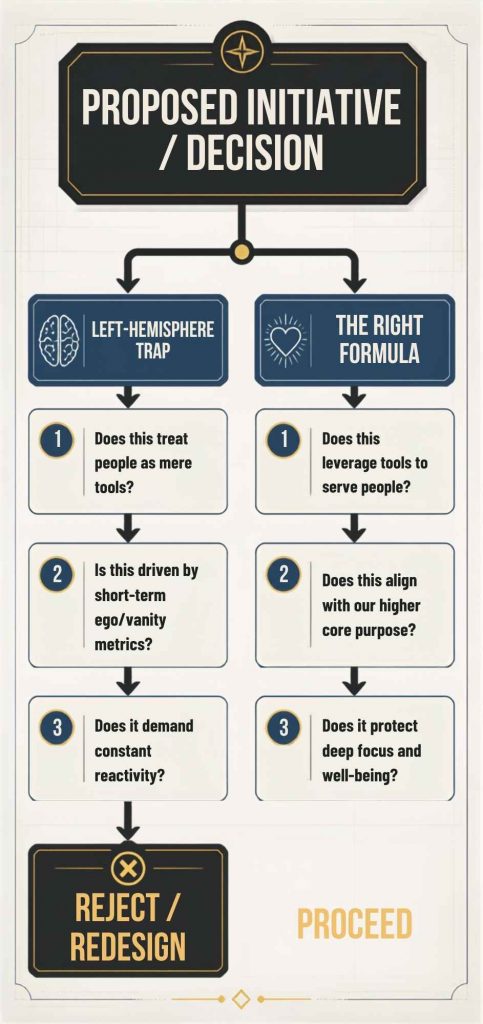
Tool 3: The Kingdom Alignment Decision Matrix
When you’re facing a big decision—whether it’s a new job, a project, or a shift in direction—try running it through this simple filter:
If you'd like to download printable versions of these reflection tools and decision matrices, you can access them directly on my Substack.