
This day of Pentecost is a special day like none other. It’s the third biggest celebration of the Christian year, behind Christmas and Easter.
The secular culture has hijacked Christmas and Easter. We have reduced Christ’s work of salvation in His birth, death, and resurrection into pagan festivals. In the secularization of Christmas, we replaced the shouts of angels in Luke’s Gospel.
“Fear not, for behold, I bring you good news of great joy that will be for all the people. For unto you is born this day in the city of David a Savior, who is Christ the Lord. And this will be a sign for you: you will find a baby wrapped in swaddling cloths and lying in a manger.”
Christmas’s blatant consumerism and feel-good motto of “buy that something special for the ones you love” has watered down its significance. The message has shifted focus from God’s miracle of the incarnation to trinkets, treats, and tribal rituals of the season. What gets lost in the commercialism is the Christ of Bethlehem.
Unfortunately, Easter has not escaped a similar fate. Society has turned the shouts of “Christ is Risen. He is Risen, indeed!” and the focus on Christ's redemption of a world lost in sin to a celebration of the passage of the dreariness of winter and the rite of spring. Lost in that transition is the suffering and death of Jesus on the cross. The proclamation from the Savior that, “It is Finished!”, the realization of the soldier, “This truly was the Son of God”, the joy of Easter morning, “the Tomb is Empty. And Christ Is Risen” have been lost.
In the case of secular Christmas and Easter, you’ll have no problem finding decorations and greeting cards. Many of them feature the embodiments of the seasons, such as Santa and the Easter Bunny. And symbols of the season, scents of pine trees, or, my favorite, chocolate bunnies (or chocolate of any kind, for that matter). We could celebrate that at least these celebrations have high name-recognition and in the past have led people who never darken our church doors back to us on these two occasions.
But Pentecost is different. Pentecost still belongs to the church. Pentecost has not gone commercial … yet! You will be hard-pressed to find a rack of Pentecost cards in a drugstore. Fortunately, there are not Holy Spirit dove chocolates. I can’t imagine the Dove ever competing with Santa and the Easter bunny. It is unlikely that we in the church will ever feel the need to remind each other to keep Pentecost in our hearts like we usually have to with Christmas. Pentecost is ours alone.
Contained in this Pentecost story are some powerful images:
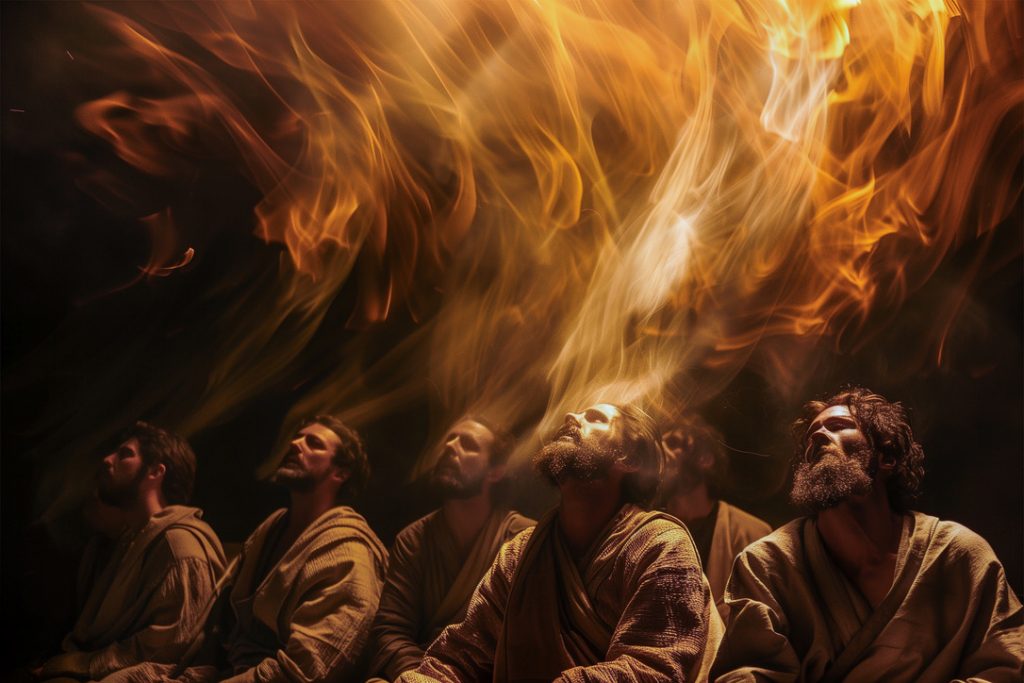
- The significance of the Holy Spirit as wind. We often take breathing for granted until the air is knocked out of us. In scripture, that essential breath is the life-force of the divine. Think back to Genesis 2, where the Lord God formed man from the dust of the ground and intimately breathed into his nostrils the breath of life. Man was just an empty shell until the wind of God entered him. At Pentecost, the church receives that same life-giving resuscitation. The rushing wind signals that God is breathing fresh, supernatural life into a disheartened community.
- The Holy Spirit as fire. Fire is one of the most powerful, essential forces in human history. It doesn't just provide light and warmth; it has a contagious, viral nature. It spreads, it moves, and it changes everything it touches. As the Holy Spirit bursts into the story of the early Church, He arrives through the spoken Word as a transforming force.This divine fire does two things simultaneously—killing and bringing to life:
- Through the Law, it consumes our self-righteousness and burns down the stubborn strongholds of our unbelief.
- Through the Gospel, it ignites a living faith that clings to Christ alone. The fire of Pentecost isn't a flame we can control or contain. It is the Holy Spirit daily drowning our old sinful nature and refining us from the inside out, scattering us into the world to set it ablaze with the message of the cross.
- Languages united around the Cross. The miraculous gift of tongues at Pentecost is not a spectacular display for personal spiritual pride; it is God reversing the ancient curse of the Tower of Babel. Look at the brilliant completeness of God’s redemptive history:
- At the Tower of Babel (Genesis 11): Human pride led to rebellion, resulting in God confusing human language and scattering humanity in judgment.
- At Pentecost (Acts 2): Divine grace humbles the heart, resulting in the Holy Spirit uniting fractured languages around a single, clear message—the death and Resurrection of Jesus. The Holy Spirit breaks down the walls of division between nations and cultures, not by erasing our differences, but by making the saving work of Christ universally understood. Where Babel scattered us in our sin, Pentecost gathers us as one body through the proclamation of the Gospel.
- The Rejection of the Power of God. The resulting scorn sometimes heaped on those who encounter the living God, who are all too often dismissed by those who say of them, “They are filled with new wine!”
Pentecost Is a Community Event
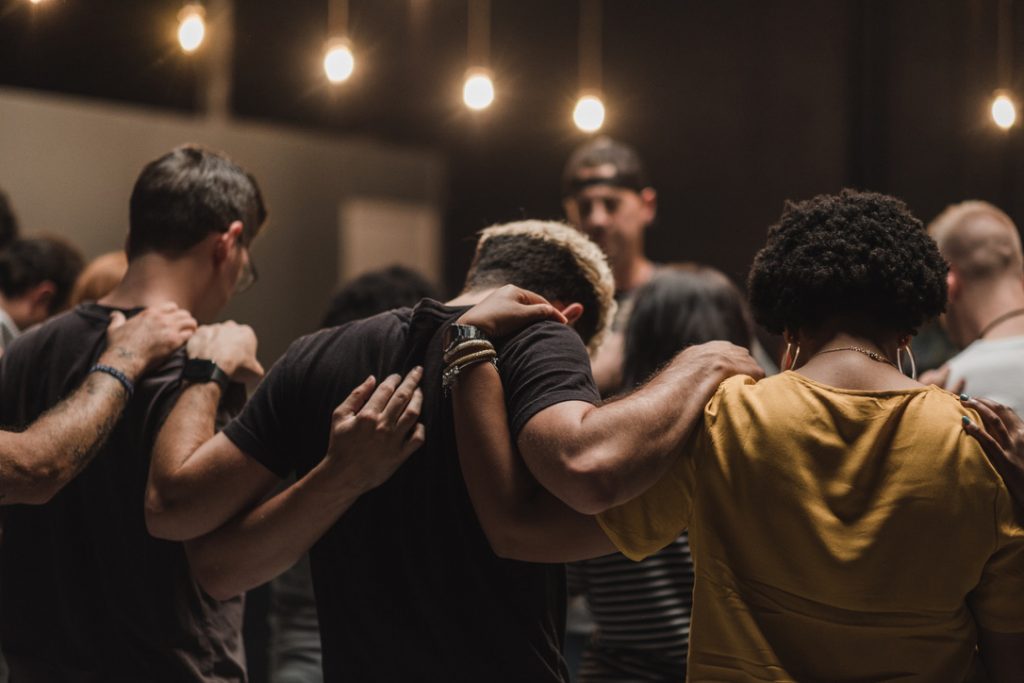
“When the day of Pentecost had come, they were all together in one place.”
It is no accident that Pentecost is also known as the Jewish holiday “the Feast of Weeks.” It is essentially a harvest festival. The Feast of Weeks was the time in ancient Israel when the first grain harvest came in.
As we examine the significance of Pentecost, when the Holy Spirit fell upon the church, it is this great harvest of new believers. The good news of the gospel brought many to faith and caused them go out into the world bearing these newfound fruits of the Spirit.
The most striking thing about this verse is the phrase, “They were all together in one place.”
So much has happened in a short period to the disciples. They had been all together in the upper room when Jesus broke the bread, shared the cup and gave a new and deeper significance to the Passover Seder meal. We then witness how the news of Jesus’ arrest and crucifixion scattered the faithful disciples and all His hundreds of followers.
The disciples’ grief over the loss of their teacher, shepherd, and mentor has now brought them together again.
You have witnessed in your church how funerals often do this. The loss of a loved one connects a once widely dispersed family and gathers them together for mutual support and remembrances.
Then came for the disciples the wonder and comfort of the resurrection. When Mary Magdalene, in John’s gospel, runs back to tell the other disciples the good news notice there’s no mention of her going from house to house in seeking them out. She knows just where to find them. The disheartened group is collected together in one place supporting each other.
They now move from the highs of the resurrection to the uncertain future of Christ ascension into heaven. They may have thought that with that event it was “game over.” Last out of the World Series, time to go home and live in the memory of all we have seen and heard. What more could God possibly have in store for them? It was like the silence following the grand finale of a fireworks display. What could they possibly do at that moment except fold the chairs and go home?
The Optics of the Great Commission.
That is most certainly not what the disciples do! “When the day of Pentecost had come, they were all together in one place.” Why? What were they hoping for?
Maybe the clue is found in the mission Jesus had left with them before He went to assume His rightful place on the throne of heaven. In Matthew 28, also known as the Great Commission, it says, “Go therefore and make disciples of all nations ….” The full weight and meaning of this get lost in the English translations. However, in the original Greek the verb “make disciples” is plural. Jesus isn’t commanding them to go out like marbles and individually witness to everyone they meet.
Too often, we are tempted as churches to send out people out with this charge, “You go and make disciples, and good luck with that!” No, Jesus is commanding them to come together and, as one body, the Church is to devise a strategy for sharing the gospel with the lost and broken world.
“Go, make me more disciples, but do it together!” We are not just individual church sites; we are the universal church, comprising over 2 billion people. Strategically placed around the world, yet called to come together and given a charge by our Risen Lord, “Go, make me more disciples, but here is the key: do it together!”
Hands off-world, Pentecost is ours. It is the birth of the church, and you can’t have it. But we will share the saving message of Christ with you. That is our charge after all.
If this message about reclaiming the true meaning of Pentecost resonated with you, don't miss a single post. Join a community dedicated to breaking down barriers and uniting the church—Sign Up for My Newsletter Today.
Excellent exhortation, Rev! You hit that one right out the park! “Keep on keeping on,” Preacher!
Thank You brother. Pentecost is my favorite high holy day as one of my former members called it.