
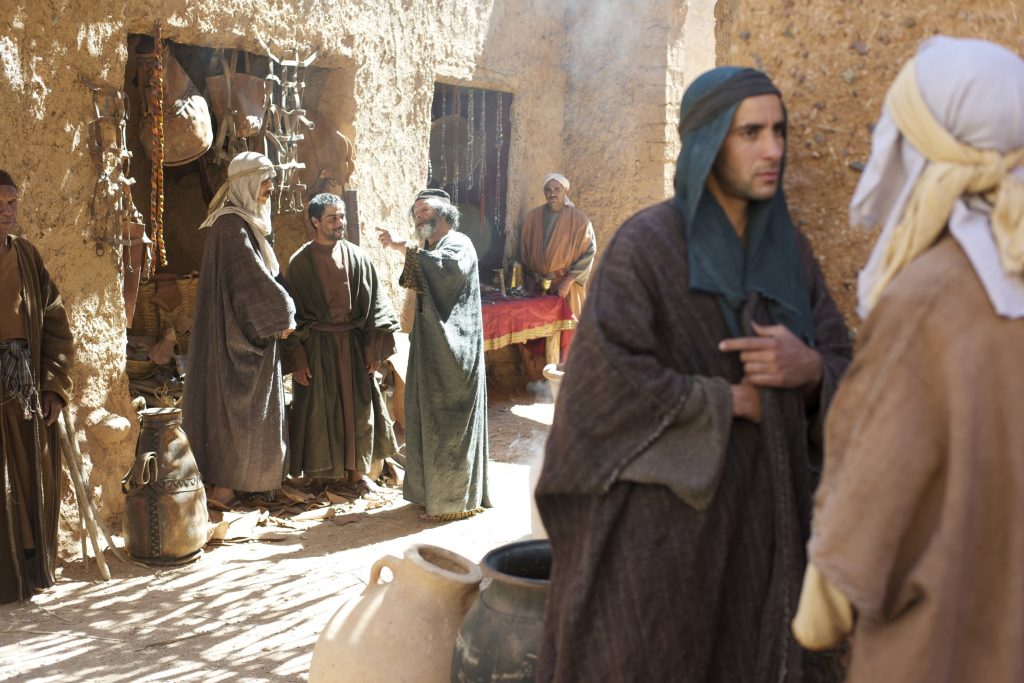
Day 12 — Syrian Village Set: Jesus heals a crippled woman, casts out an impure spirit, and restores a man's withered hand.
In Matthew 21:23–32, Jesus confronts the chief priests and religious leaders with the Parable of the Two Sons, exposing the stark difference between polite lip service and active, transformational obedience.
Text: Matthew 21:23–32
23 And when he entered the temple, the chief priests and the elders of the people came up to him as he was teaching, and said, “By what authority are you doing these things, and who gave you this authority?” 24 Jesus answered them, “I also will ask you one question, and if you tell me the answer, then I also will tell you by what authority I do these things. 25 The baptism of John, from where did it come? From heaven or from man?” And they discussed it among themselves, saying, “If we say, ‘From heaven,’ he will say to us, ‘Why then did you not believe him?’ 26 But if we say, ‘From man,’ we are afraid of the crowd, for they all hold that John was a prophet.” 27 So they answered Jesus, “We do not know.” And he said to them, “Neither will I tell you by what authority I do these things.
28 “What do you think? A man had two sons. And he went to the first and said, ‘Son, go and work in the vineyard today.’ 29 And he answered, ‘I will not,’ but afterward he changed his mind and went. 30 And he went to the other son and said the same. And he answered, ‘I will, sir,’ but did not go. 31 Which of the two did the will of his father?” They said, “The first.” Jesus said to them, “Truly, I say to you, the tax collectors and the prostitutes go into the kingdom of God before you. 32 For John came to you in the way of righteousness, and you did not believe him, but the tax collectors and the prostitutes believed him. And even when you saw it, you did not afterward change your minds and believe him.
Ever walked into a room where people are smiling at you and you can feel the knives behind their backs?
Introduction: The Question Behind the Question
That's the temple courts on a Tuesday morning. Jesus has just turned over tables. He's healed the blind and the lame in the middle of the sanctuary. And now the chief priests and the elders of the people walk up to Him with their most polite, most reasonable-sounding question: "By what authority are You doing these things? And who gave You this authority?"
It sounds like a theological question. It isn't. It's a trap. If Jesus says, "My authority comes from heaven," they charge Him with blasphemy. If He says, "John the Baptist sent me," they can dismiss Him as a disciple of a wild man. And if He says nothing, the crowd goes home convinced He's a fraud.
But notice what they can't do. They can't deny the works. The temple is cleaner. The blind can see. The lame are walking. So they don't attack the evidence — they attack the credential. They go after the resume.
And here's what I want us to sit with this morning: this is not just a story about first-century politicians in robes. This is a story about every one of us who has ever been more concerned with protecting our standing than following God's voice. It's a crazy journey from "who gave You this authority" to "which son did the will of his father" — and by the time we get there, the mirror is pointed straight at us.
So let's get started.
1. The Trap Before the Parable of the Two Sons (vv. 23–27)
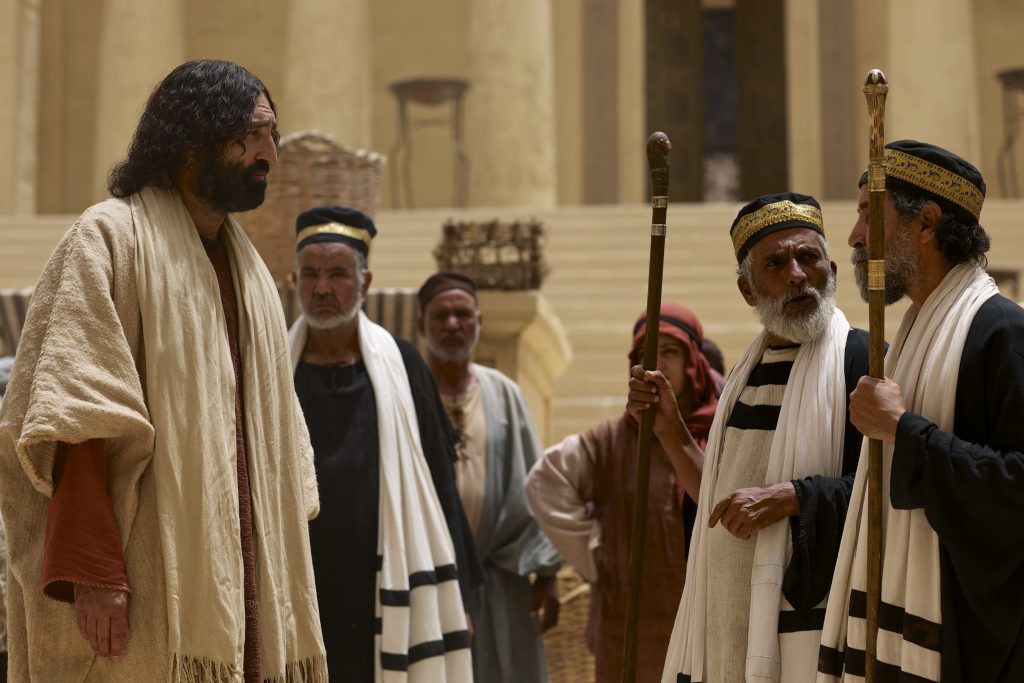
Jesus doesn't answer their question. He asks one of His own: "The baptism of John — where was it from? From heaven or from men?"
Now watch what happens. The text says they "reasoned among themselves." That word there — syllogizomai (G4817) — is a math word. They're calculating. They're running the political odds. And here's the tell: they never once ask the honest question. They never say, "Wait — was John actually from God?" They go straight to "Which answer is safer?"
That's the drift. That's what happens when we've been in church world long enough that we start managing our faith instead of living it. We ask "what will people think" before we ask "what does God say."
And so they land on the coward's answer: "We do not know."
Jesus' response is devastating in its simplicity: "Neither will I tell you by what authority I do these things." Their refusal to answer was itself an answer. If they genuinely don't know where John's baptism came from, they have no standing to put Jesus on trial. Their ignorance is self-inflicted. They saw the light and chose the dark because the dark was safer.
Here's the principle: you cannot evaluate what God is doing in your life if you've already decided which answers you're willing to hear. The chief priests had seen enough evidence to know. They just couldn't afford to say it out loud.
What does this mean for how you show up? It means the most dangerous place to be isn't outside the church wondering if God is real. It's inside the church, running the numbers, protecting the brand, and calling it discernment.
2. Parable of the Two Sons: The Son Who Said Yes and Stayed Home (vv. 28–30)
So Jesus tells a story. A man has two sons. He goes to the first: "Son, go, work today in my vineyard." The boy says, "I will not." Rude. Blunt. Disrespectful to his father's face.
But afterward — and this is the hinge of the whole parable — he regretted it and went.
Then the father goes to the second son with the same request. And this boy is a delight. "I go, sir." Respectful. Polite. The kind of answer that makes a parent post it on social media.
But he did not go.
Now, in the study of this passage there's a beautiful little detail worth holding onto. The word for "regretted" in verse 29 is metamellomai (G3338) — it means to change your mind and act on it. But when Jesus applies the parable in verse 32, He uses a different word entirely: metanoeō (G3340) — repentance. A change of mind and a change of direction. Matthew shifts the vocabulary on purpose. The first son's change of mind isn't just a mood. It's the outward sign of a heart that turned around.
And that's the whole parable in one line: the question was never what the sons said. The question was what they did.
I think about this like the difference between a signed offer letter and someone actually showing up for the first day of work. You can have all the right language on the paper. You can nail the interview. But the vineyard doesn't get worked by words. The vineyard gets worked by people who show up.
The second son is the tragedy of religious respectability. He had the vocabulary. He had the training. He had the title. And he had nothing else. Confession and life have to match — not because the doing earns the kingdom, but because a "yes" that never leaves your lips was never really a yes at all.
3.
The Parable of the Two Sons Verdict That Flips the Room (vv. 31–32)
Jesus asks the obvious question: "Which of the two did the will of his father?"
They answer correctly. "The first." Even the men trying to trap Him can see it.
And then Jesus drops the hammer: "Assuredly, I say to you that tax collectors and harlots enter the kingdom of God before you."
Read that again. Not instead of you. Before you. The door is still open — we see that in the very next parable, the wedding feast in Matthew 22. But the order has been reversed. The people the religious leaders wouldn't eat with, wouldn't acknowledge, wouldn't let near the good seats — they're getting in first. Why? Because when John came preaching in the way of righteousness, they believed him. And when the chief priests saw the very same evidence, they "did not afterward relent and believe him."
That is the most sobering sentence in the passage. It's not that they never saw God move. They saw it. They just refused to let it change them.
This is where the Law lands on us this morning, and I want to be honest with you about it: religious respectability is not the same thing as faith. Institutional standing is not the same thing as repentance. You can serve on every committee, know every hymn, and tithe to the penny, and still be the second son — all words, no follow-through.
But hear the Gospel right behind it, because this is a Law-and-Gospel text and we don't leave people in the ditch. The tax collectors and the harlots — the morally ruined, the people with the worst resumes in Jerusalem — they repented and they entered. Grace reaches the undeserving first. Conversion is entirely God's work, and the first son's change of heart wasn't him earning his way in. It was the Spirit bearing fruit in a life that had said no.
Which means if you're sitting here this morning with a résumé you're ashamed of — radical grace is not a slogan in this church. It's the actual structure of the kingdom. The Father is still sending people to the vineyard. And the door is still open for anyone willing to stop managing and start moving.
What Does This Mean for How You Show Up?
Let me leave you with three questions to take into this week.
First, where are you the second son? Where do you have the right words — "I'll pray about it," "I'm in," "yes, sir" — and no follow-through? Name it. Don't dress it up. The vineyard is waiting.
Second, where have you been the first son? Maybe you resisted. Maybe you said no to God for years. But something moved, and you went anyway. If that's you, take a step. The story isn't over. God is not finished with your crazy journey.
Third, what evidence of God's work have you seen and left unaddressed? The leaders saw and would not relent. Don't be them. When God moves in front of you — in a conversation, in a conviction, in a need you can't unsee — respond while the seeing is fresh.
It's a season of cultural confusion and endless noise. But the vineyard hasn't changed. The Father's voice hasn't changed. And the question of authority hasn't changed either: Jesus speaks with the authority of heaven, and He's still calling sons and daughters to work.
Stop watching from the sidelines. Let's build together. Grab your blueprints.
For more devotions, weekly reflections, and leadership insights, subscribe to my publication on Substack.
Dr. Keith Haney is an author, podcast host, and executive leader specializing in organizational management, leadership development, and strategic communication. As the host of the Becoming Bridge Builders podcast and author of Guided by Grace: A Narrative to Lead Organizational Change, he equips leaders with practical frameworks for navigating complex transitions, improving decision clarity, and fostering meaningful connections in high-stakes environments.