
“He will turn the hearts of fathers back to their children, and he will turn the disobedient to righteous patterns of thinking.” — Luke 1:17b
Fatherhood is not for wimps. It is a beautiful, heavy, and deeply rewarding responsibility, but as we reflect on the true meaning of Father's Day, it’s clear that subtle pitfalls litter the journey.
If I could give just one piece of advice to younger fathers, it would be this: Don’t work so hard for your children that you forget to be there with your children. As providers, it is remarkably easy to get sucked into the "rat race" mindset. The trap is subtle and snaps shut quickly, convincing us that financial provision is the only thing that truly matters. But we must beware of what I call the "Cat's in the Cradle" Syndrome.
Most of us know "Cat's in the Cradle" as the hauntingly famous folk song by Harry Chapin. What many don't know is that his wife, Sandy, originally wrote the words as a poem long before she gave birth to their son Josh. Once their boy arrived, the words became a song—and a timeless warning to fathers.
The Cat’s in the Cradle Syndrome: A Father's Day Warning
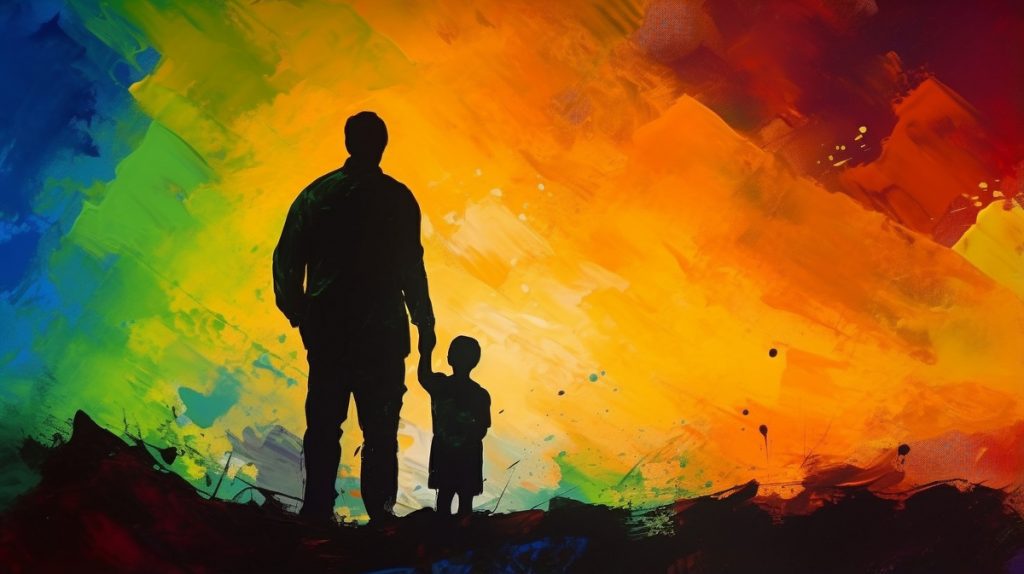
The emotional climax of the song serves as a mirror for every busy dad:
“I’ve long since retired, my son’s moved away
I called him up just the other day
I said, “I’d like to see you if you don’t mind”
He said, “I’d love to, Dad, if I can find the time
You see my new job’s a hassle and kids have the flu
But it’s sure nice talking to you, Dad
It’s been sure nice talking to you”
And as I hung up the phone it occurred to me
He’d grown up just like me
My boy was just like me.”
The Law of Trusts vs. The Trust of a Child
Consider this powerful historical illustration of that very cycle:
Doctor Potter once shared the story of a young man standing at the bar of justice, awaiting a judge's sentence for forgery. The presiding judge had known the young man since childhood because the boy's father was a legendary legal mind—famous for writing the most exhaustive, definitive text on the Law of Trusts.
“Do you remember your father?” the judge asked sternly. “That great father whom you have disgraced?”
The prisoner looked at the judge and answered: “I remember him perfectly. Whenever I went to him for advice or companionship, he would look up from his book on the Law of Trusts and say, ‘Run away, boy, I am busy.’ My father finished his book, and here I am.” The brilliant lawyer mastered the legalities of trusts, but he neglected his most sacred earthly trust—his own son.
Father's Day Grace for the Journey: You Are Not Alone
If your children are already grown and you are looking back with regret, please hear this: You are not alone, and you are not a bad father. Scripture is filled with a long list of godly parents who stumbled, made poor choices, or struggled to raise their children effectively. Even the heroes of our faith faced deep family fractures:
- David pampered Absalom and set a poor moral example, serving as a timeless Father's Day reminder of how easily family leadership can fracture.
- Eli failed to discipline his sons, which ultimately brought disgrace to his name and defeat to the nation of Israel.
- Isaac and Rebekah played favorites—Isaac pampering Esau while Rebekah favored Jacob—resulting in a deeply divided home.
- Jacob repeated the cycle by showing blatant favoritism to Joseph, requiring God’s radical, providential intervention in Egypt to preserve the family line.
You cannot step into a time machine to undo missed birthdays, skipped baseball games, or forgotten recitals. But you can choose to be there for them right now. Grace meets us where we are, not where we wish we had been.
A Call to Action for Younger Fathers
For the younger dads who are still in the thick of it: learn from the mistakes of those who went before you.
- Refuse to put your career ahead of your kids. Stop justifying grueling hours under the guise of "doing it for them."
- Understand that your presence is the prize. This Father's Day, remember that material provision cannot replace your physical and emotional availability.
The critical nature of your role spans centuries. In the ancient Roman world of the Apostle Paul, a father held patria potestas—supreme life-and-death authority over the household. When a mother delivered a newborn, the midwife placed the infant on the floor before the father. If he picked the baby up, he accepted the child into the family. If he turned away, he rejected the child, often selling them or leaving them to the elements.
While modern culture has changed, the psychological reality hasn't: children still look to their fathers for acceptance, validation, and identity. Men, do not take your role lightly. Do not internalize the cultural myth that fathers are secondary or optional. You play a critical, irreplaceable role in building bridges for the next generation. Choose to show up today.
For more insights on leadership and building meaningful connections, listen to the latest episodes of the Becoming Bridge Builders podcast.